 Artificially generated image
 These Are the Necklaces Chosen This Season
Necklaces can change the tone of an outfit faster than almost any other accessory, which is exactly why they are so relevant this season. Current designs move between minimal chains, tactile beads, and bold pendants, giving everyday dressers more room to show personality without losing comfort or practicality. This article looks at the main trends, the necklace styles people are reaching for most often, and the smart ways to wear them from morning errands to evening plans. If you want jewelry guidance that feels modern, useful, and easy to adapt, the sections below will give you a clear place to start.
Outline: 1) the seasonal direction shaping today’s necklace choices, 2) the silhouettes that are most popular right now, 3) easy ways to style jewelry every day, 4) practical advice on materials, length, and wardrobe fit, and 5) a final summary for readers building a wearable necklace rotation.
1. The Seasonal Mood: What Necklace Trends Are Defining the Moment
Every season develops its own visual rhythm, and necklaces often reveal that shift before almost any other accessory. This time, the mood is not built around a single dominating look. Instead, the strongest direction is variety with purpose. Delicate chains still matter, but they now share space with sculptural pendants, short collars, beaded strands, and updated pearls. Rather than asking people to choose between understated or dramatic, the season invites both, depending on how the piece interacts with clothing, occasion, and personal taste.
One reason this feels fresh is the balance between polish and ease. Fashion presentations, street style photography, and retail assortments all suggest that jewelry is being treated as part of daily dressing rather than as a final, optional extra. A necklace can sharpen a white shirt, soften a blazer, or give shape to a plain knit. That practical role explains why versatility has become such a strong value. The idea can be summed up neatly in the phrase: Una panoramica sulle collane di questa stagione, con focus su tendenze e versatilità nello stile.
Several visual themes are especially visible right now. Mixed metals are more accepted than they were in stricter styling eras, which makes pairing easier for people who already own both silver and gold-toned pieces. Texture is also important. Smooth snake chains, hammered pendants, resin beads, and irregular pearls all add movement and depth, even when the outfit itself is simple. At the same time, longer lines are reappearing after years of strong emphasis on close-to-the-neck layering. A long pendant over a crewneck top offers a different effect from a tight choker over bare skin, and both are clearly present this season.
What makes these trends useful is that they do not require a complete wardrobe reset. In fact, the most wearable necklace trends work precisely because they adapt to existing clothes. A quiet black dress can handle a chunky chain. A striped tee can support a tiny pendant. An oversized button-down becomes more deliberate with a collar necklace resting above the placket. This is where trend awareness becomes genuinely helpful: it teaches you how to refresh familiar outfits through proportion, shine, and texture rather than through constant replacement.
There is also a subtle shift in attitude. Necklaces are not being used only to signal luxury or status. They are being used to create point of view. Some people want a single sculptural piece that feels architectural. Others prefer a story made of layers, charms, and small symbolic elements. Both approaches fit the season well, because current styling is less about strict rules and more about controlled expression. The result is a jewelry landscape that feels open, creative, and highly wearable.
2. Popular Necklace Styles and How They Compare
If trends describe the atmosphere, styles describe the tools you actually wear. The most popular necklaces this season fall into a few recognizable families, each with a different effect on an outfit. Understanding these categories helps far more than simply scrolling through inspiration photos, because it lets you choose pieces based on function as well as appearance.
The simplest category is the fine chain. This is the quiet worker of most jewelry collections: subtle, lightweight, and easy to wear with nearly everything. Fine chains suit office looks, casual weekend outfits, and layered combinations. They rarely overwhelm a neckline, which makes them useful for people who prefer a refined finish. However, on their own they can sometimes disappear against heavy fabrics or busy prints, so they often perform best when paired with a small pendant or a second chain of different length.
Pendant necklaces are popular because they give structure to a look. A pendant acts like a focal point, drawing the eye to the center of the outfit. Minimal geometric pendants feel neat and modern, while organic stones or sculptural charms create a softer, more expressive effect. Their strength lies in clarity: one piece, one visual destination.
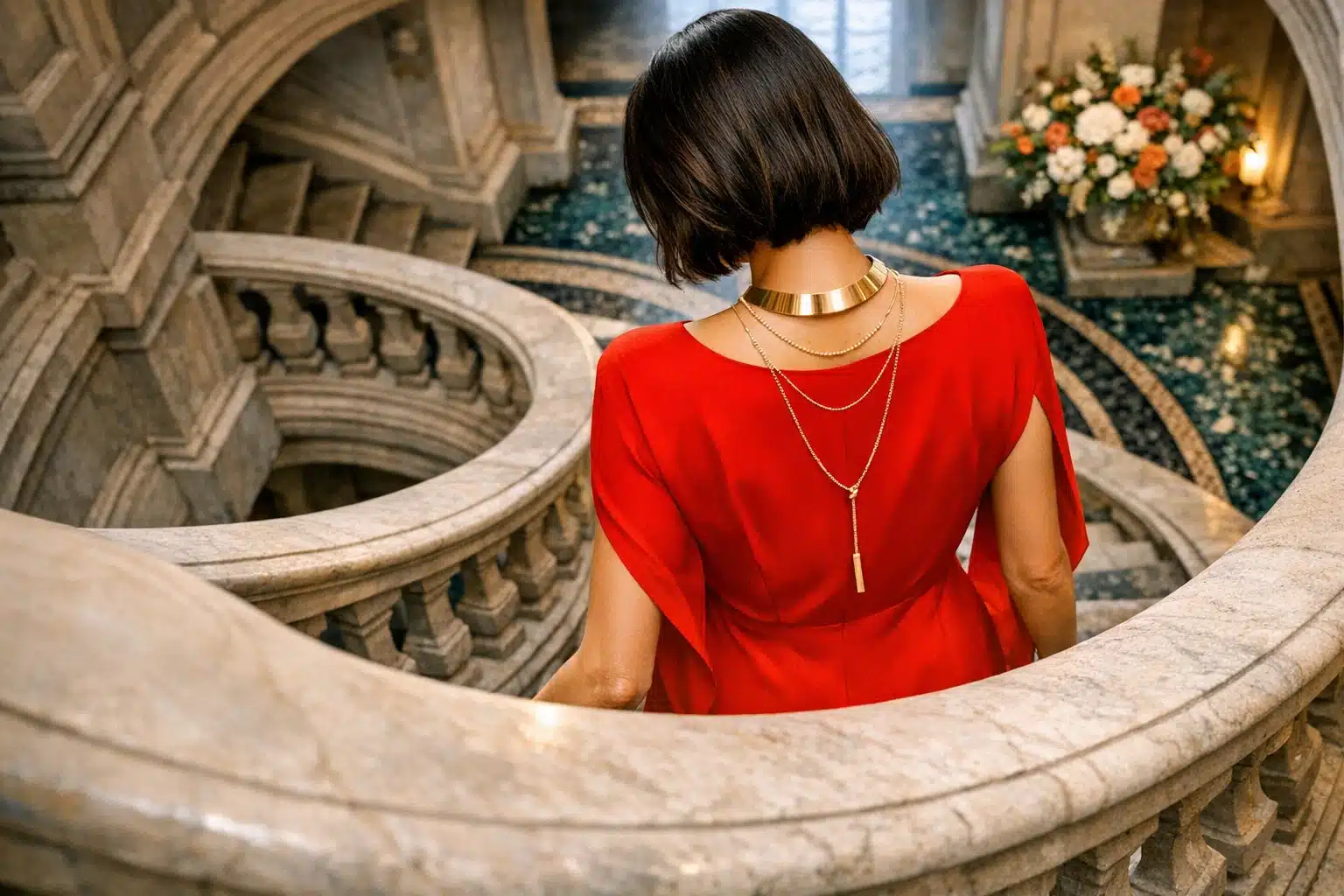
Shorter styles, including chokers and collar necklaces, are also returning with confidence. These look especially strong with open necklines, strapless tops, boat necks, and clean tailoring. They frame the face effectively and can make simple clothing appear more intentional. The challenge is proportion. A collar that is too wide for the outfit can dominate rather than enhance, so balance matters.
Beaded necklaces and pearls have moved well beyond old-fashioned associations. Today’s versions may include irregular shapes, vivid color, mixed materials, or asymmetrical arrangements. They bring warmth and character, especially to basics like denim shirts, tanks, and knitwear. Pearls in particular are being styled in less formal ways, often with crisp cotton, leather, or oversized silhouettes.
For quick reference, here is how these styles often behave in real wardrobes:
• Fine chains: discreet, flexible, easy for layering
• Pendants: focused, expressive, strong with plain tops
• Chokers and collars: bold, face-framing, best with clean necklines
• Beaded styles: playful, textured, useful for adding color
• Pearls: classic with modern potential when styled casually
• Long necklaces or lariats: elegant, lengthening, especially effective over knits
The reason these styles remain popular is not mystery but usability. Each one solves a slightly different styling problem. Fine chains add polish. Pendants add emphasis. Chokers add structure. Beads add personality. Pearls add contrast. Once you see them that way, shopping and styling become much more intentional.
3. Everyday Jewelry Ideas: How to Style Necklaces Without Overthinking It
The best everyday jewelry does not ask for a ceremony. It should slip into real life easily, whether you are getting dressed for work, meeting friends for coffee, or trying to make a simple outfit feel more awake. Necklaces do this especially well because they sit near the face, where small details can have an outsized effect. A plain T-shirt and trousers may not seem memorable on a hanger, but add the right necklace and the look starts speaking in a different tone.
A useful rule is to treat the necklace as punctuation. Not the whole sentence, just the mark that changes how the sentence sounds. With a crewneck sweater, a medium pendant adds a vertical line that breaks up the solid surface. With an open-collar shirt, layered chains can echo the neckline and make it feel relaxed rather than unfinished. With a high-neck dress, longer styles prevent the upper half from appearing too closed. These are small adjustments, but they create visible differences.
For daily wear, simplicity usually works better than quantity. Instead of putting on every piece you own, think in combinations. Two thin chains of different lengths often look more deliberate than four unrelated ones. A sculptural single necklace can be stronger than several faint pieces fighting for attention. If earrings are large, keep the necklace quieter. If the necklace is bold, let it lead.
Some easy styling formulas are consistently effective:
• White T-shirt + mid-length pendant + small hoops
• Button-down shirt + short chain layered with one longer chain
• Knit dress + long necklace for vertical definition
• Tank top + collar necklace for a clean, graphic effect
• Blazer + slim chain tucked just inside the neckline for subtle shine
Color also matters. Warm metals can bring softness to beige, cream, olive, and brown tones. Cool metals often sharpen navy, grey, black, and bright white. This is not a law, only a helpful starting point. Mixing metals can look especially modern when repeated elsewhere, such as a silver watch with a gold-toned necklace clasp detail or a ring stack that echoes both finishes.
There is also room for mood. Some mornings call for something almost invisible, like a tiny chain that catches light only when you move. Other days need more character, perhaps a necklace with beads, a coin pendant, or an irregular pearl that feels collected rather than perfectly matched. That little shift can change how you carry an outfit. Everyday jewelry, at its best, is not about dressing louder. It is about dressing with more intention while keeping the process enjoyable.
4. Choosing the Right Necklace: Length, Material, Budget, and Wardrobe Fit
Buying or choosing a necklace becomes much easier once you stop thinking only in terms of trend and start thinking in terms of fit. A beautiful piece that does not work with your wardrobe will sit in a drawer, while a thoughtfully chosen one can become part of your routine for years. The main filters are usually length, material, visual weight, and compatibility with the clothes you wear most often.
Length is the first practical question. Short necklaces sit close to the neck and naturally draw attention upward, making them effective for open collars and minimalist tops. Mid-length pendants are highly adaptable and often work best for daily styling because they complement both casual and slightly polished outfits. Long necklaces create a vertical line, which can be useful over chunky knits, simple dresses, or high necks. If you often wear layered clothing, a range of lengths gives you more flexibility than multiple necklaces of the same drop.
Material matters for both appearance and maintenance. Sterling silver offers a clear, cool shine and can be polished when tarnish appears. Gold vermeil gives a richer look at a lower price than solid gold, though it needs gentler treatment. Stainless steel is durable and practical for people who want low maintenance. Plated fashion jewelry can be fun for experimenting with trends, but it may not age as well with frequent wear. Beads, pearls, resin, leather, and cord each bring different textures, so choosing among them is not only about durability but also about the kind of finish you want near the face.
Budget is another important factor, and a smart approach is often mixed rather than all-or-nothing. You might invest more in a classic chain or versatile pendant that you will wear weekly, then spend less on trend-forward pieces like colorful beads or oversized charms. This creates room for experimentation without making every purchase feel weighty.
Consider these wardrobe questions before buying:
• Do I mostly wear crewnecks, collars, V-necks, or high necks?
• Do I lean toward silver, gold, or mixed hardware on bags and belts?
• Do I want one signature piece or several easy basics?
• Will this necklace still work with at least five outfits I already own?
Perhaps the most overlooked factor is scale. A petite pendant can get lost against thick winter layers, while a chunky chain may feel excessive with a delicate summer dress. When the scale matches the outfit, the necklace looks natural rather than forced. That is often the difference between a piece you admire and a piece you actually wear.
5. Conclusion: Building a Necklace Wardrobe That Feels Current and Personal
If you have made it this far, one idea should stand out clearly: this season’s necklace trends are broad enough to be useful, not just decorative. That is good news for anyone trying to build a jewelry wardrobe that feels current without becoming chaotic. You do not need dozens of pieces, and you do not need to chase every micro-trend that appears on a screen for a week and vanishes the next. What helps most is knowing which styles serve your life, your clothes, and your sense of self.
For many readers, the strongest starting point is a compact rotation. One fine chain, one pendant, one slightly bolder piece, and one textural option such as pearls or beads can cover a surprising amount of ground. From there, styling becomes less about buying more and more about combining more intelligently. A necklace should work with your real wardrobe, not with an imaginary lifestyle made of special events and perfect lighting.
Think of necklaces as tools for shaping mood. They can make basics feel finished, soften strict tailoring, add warmth to minimal dressing, or create a memorable detail in an otherwise quiet look. Their power is subtle but real. Because they sit so close to the face, they influence how an outfit is read almost immediately. That is why even a small adjustment in chain length, pendant size, or material can change the result more than expected.
A practical recap may help:
• Follow trends for direction, not for obedience
• Choose styles based on necklines and daily outfits
• Mix statement pieces with easy basics
• Pay attention to scale, texture, and length
• Invest more in versatile staples and experiment lightly with seasonal accents
For readers interested in style that feels wearable, modern, and expressive, necklaces are one of the simplest places to begin. They offer visible impact without requiring a complicated wardrobe plan. Start with what you already wear, notice where an outfit feels flat, and let a well-chosen necklace do the quiet work of refinement. That approach is far more sustainable, more personal, and usually more elegant than following every passing idea without pause.